
How to Price Thrifted Items for Maximum Profit
Pricing is one of the trickiest parts of reselling. Price too high and your item sits forever. Price too low and you barely make a profit after fees and shipping.
The good news? There's a method to it. You don't have to guess. Smart resellers use real data and simple rules to price their items just right.
Let's walk through exactly how to do it.
Related: How to Tell If Something Is Worth Reselling in Under 30 Seconds
Step 1: Research Sold Comps (This Is Non-Negotiable)
Before you price anything, you need to know what it's actually selling for. Not what people are asking — what buyers are actually paying.
Here's how to check:
Related: The 10 Biggest Mistakes New Resellers Make
On eBay:
- Search for your item
- Click "Filter" and then check "Sold Items"
- This shows you completed sales — real prices that real buyers paid
On Poshmark:
- Search for your item
- Tap "Filter" and select "Sold" under availability
- Look at what similar items in similar condition sold for
On Mercari:
- Search your item and filter by "Sold" status
Look at at least 5-10 sold listings for similar items. Note the price range. If a brand of jeans consistently sells for $25-$35, that's your target zone. Don't list them for $60 hoping for a miracle.
This step takes 2-3 minutes per item. It's the most important thing you can do for your pricing strategy.
Step 2: Use the 3x Rule as Your Starting Point
Here's a simple rule that many resellers live by: try to sell items for at least 3 times what you paid.
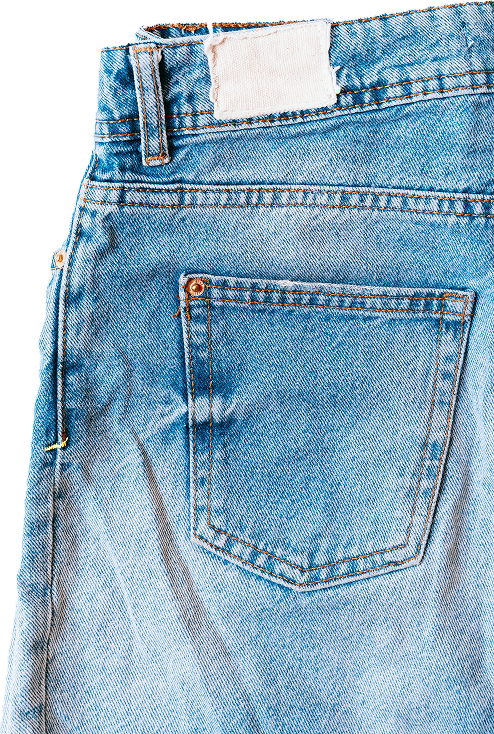
So if you bought a pair of jeans at the thrift store for $4, you'd aim to sell them for at least $12. If you found a designer bag for $15, you'd want to sell it for $45 or more.
Why 3x? Because once you subtract platform fees, shipping costs, and the cost of supplies like poly mailers and tissue paper, that 3x multiplier is what actually gives you a healthy profit.
Here's a quick example:
- You pay $3 for a top at Goodwill
- You list it for $15 on Poshmark (that's 5x — even better!)
- Poshmark takes their 20% fee: -$3
- Your poly mailer and tissue paper cost about -$0.50
- Your profit: $8.50
Not bad for a $3 investment, right?
Now compare that to selling the same top for $8:
- Poshmark flat fee on items under $15: -$2.95
- Supplies: -$0.50
- Your profit: $1.55
That's barely worth the time it took to photograph, list, and ship it. The 3x rule keeps you out of that trap.
Step 3: Factor in Fees and Shipping
Every platform takes a cut. You need to know these numbers so you're not surprised.
- Poshmark: 20% commission on sales over $15. Flat $2.95 fee on sales under $15.
- eBay: Around 13% in final value fees for most categories, plus payment processing.
- Mercari: 10% selling fee.
- Depop: 10% selling fee (though this can vary).
- Facebook Marketplace: Free for local pickup sales. Small fee for shipped items.
Shipping is another big one. On Poshmark, the buyer pays shipping, which is nice. On eBay and Mercari, you often need to offer free or discounted shipping to stay competitive. That comes out of your profit.
A good habit: always calculate your profit after fees and shipping before you finalize a price. If the math doesn't work, it's okay to skip that item or price it higher.
Step 4: Choose Your Pricing Strategy
There are two main approaches, and both work. Pick the one that fits your style.
Strategy A: Price High, Then Drop
List your item at the top of the comp range (or slightly above it). Then, if it doesn't sell within 2-3 weeks, drop the price by 10-15%.
This works well because:
- You might catch a buyer who wants it right now and will pay full price
- Price drops on Poshmark trigger notifications to people who liked your item
- You can slowly find the sweet spot without underselling yourself
Strategy B: Competitive Pricing
List your item right in the middle of the comp range from day one. This usually leads to faster sales.
This works well when:
- You want to turn inventory quickly
- You're selling items that are commonly available (not rare or unique)
- You need cash flow more than maximum profit per item
Honestly? Most successful resellers use a mix of both. Rare or desirable items get priced high. Common items get priced competitively.
Step 5: Know When to Bundle
Sometimes individual items aren't worth listing on their own. A plain t-shirt you paid $1 for might only sell for $5 — and after fees, that's barely worth your time.
That's when bundling saves you.
Ways to bundle:
- Similar items together: 3 graphic tees for $25, a set of 5 kids' shorts for $20
- Outfit bundles: a top + matching skirt listed together
- Lots: especially on eBay, you can sell lots of similar items to other resellers
Bundling lets you move lower-value items while still making a solid profit. Instead of making $2 on one tee, you make $12 on three of them. Much better use of your time.
Quick Pricing Cheat Sheet
- Always check sold comps before pricing anything
- Aim for 3x your cost at a minimum (5x+ is the dream)
- Subtract fees and shipping to see your real profit
- Price high on rare items and competitively on common ones
- Drop prices every 2-3 weeks if something isn't moving
- Bundle low-value items instead of listing them individually
- Don't be afraid to pass on items with thin margins

Make Pricing Easier with the Right Tools
Once you've nailed your pricing, you'll want to get those items listed and in front of buyers as fast as possible. That's where crossposting comes in.
You Might Also Like
- How to Tell If Something Is Worth Reselling in Under 30 Seconds
- The 10 Biggest Mistakes New Resellers Make
- What Sold This Month: Real Thrift Store Flips and Profits
- How Much Money Can You Make Reselling Thrift Store Finds?
Listing on multiple platforms means more buyers see your perfectly priced items. And tools like List Perfectly make it easy to post to Poshmark, eBay, Mercari, and more — all from one place. Use code THRIFT30 to save on your subscription and start getting your items in front of more buyers today.